Chance

I didn't realize that E. coli was still out there - in recent years I had heard so little about it that I thought we were safe.

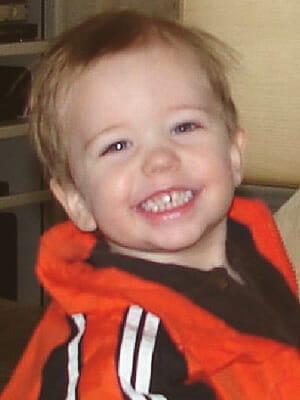
This is a story about my son Chance. Chance almost died of E. coli poisoning in August of 2005. We didn’t realize how appropriate his name would be when we named him. Now we realize how fortunate we are that he is still alive. Chance is now almost two. When he was sick he was just 18 months old. We even wrote a book about Chance and this trying event.

We were on vacation in South Dakota for a week. As we were returning home from South Dakota, Chance had a really soft stool that was greenish in color. It wasn’t diarrhea but it was soft. I thought it was kind of odd, since I couldn’t think of anything that he had eaten that was green, but I didn’t really think anything of it at the time because he didn’t have any other symptoms of being sick.

We arrived at home around 7:30. We unpacked the car and got ready for bed. My husband Kip started feeling sick with the chills and body aches. He thought maybe he was coming down with the flu. The next morning he was really sick, complaining of chills, really severe body aches, nausea, and diarrhea.

Monday 8/1

I went to work and later in the day started to get diarrhea. Kip finally called his doctor and made an appointment for 2pm. The Dr told him it was probably viral and took a blood sample to test. At 4pm the babysitter called said that Chance had a fever of 100.3. I left work early to pick him up.

When I came home, I had some chills and nausea, and escalating diarrhea. Kip felt really awful. He didn’t have anything to eat and went straight to bed. Chance had a little bit of yogurt, and some salami. He didn’t eat very much. I gave Chance some Motrin for the fever and put him to bed at 8pm. I went to bed.

My husband tossed and turned and was unable to sleep. Chance woke up at 10:00pm. I went in to see why he was crying, and found that he had vomited all over his bed. I pulled him out and cleaned him up.

At that point I got into the bed in our guest bedroom with Chance because I didn’t want him throwing up by himself. Chance got up several times during the night to throw up. He stopped throwing up about 8am the next morning (Tuesday). My husband didn’t throw up, but he was having such severe body aches and chills that he couldn’t sleep.

Tues 8/2

Chance seemed to recover somewhat in the AM. He ate some cereal with milk, and I gave him some Motrin and left to go to work around 10am. My husband stayed with Chance. I had really severe diarrhea throughout the day but kept it somewhat under control with Immodium. At this point, we still thought it was a particularly nasty bout of the flu.

That night, Chance seemed to be ok so I put him to bed at 8pm. He did not vomit all day. My husband was still very sick and everyone went to bed early. At around 10pm, Chance started to cry on the monitor. I went in to see what was wrong, and Chance had a large diarrhea and it was on his sheets and all over him so I took him out to bath him quickly and put his sheets in the wash. Chance had diarrhea about every hour throughout the night. I slept with him in the guest bedroom again.

Wed 8/3

Chance got up the next morning and had a little cereal to eat but not much. I went to work and my husband stayed home with him. Kip was still sick but was feeling a little better.

My husband called at 11am and said that he changed a diarrhea diaper and that it looked like it had blood in it. We decided to take him to an urgent care center near our home. At the urgent care center, they tried to get a stool culture but couldn’t. They gave him some fluids, but he didn’t really perk up so they recommended that we go over to Lutheran Hospital urgent care so they could examine him and then admit him to the hospital if needed.

We took Chance over to Lutheran urgent pediatric care which is basically part of the emergency room at Lutheran. They managed to get a stool sample and sent it to the lab to determine if it was viral or bacteria oriented. They gave Chance some fluids and he began to improve.

He was responsive and he seemed to be himself again. He ate a popsicle and a half. We made the decision with the doctor to take him home and see how he did overnight. He had a couple of wet diapers but no diarrhea during the night. He seemed to be his usual self, but I kept him in bed with us to monitor him.

Thurs 8/4

When he got up he ate a few bites of cereal, but not very much. He started to have diarrhea again. He became lethargic again, and we decided to take him over to his primary care doctor.

His primary care doctor was amazing. We were so fortunate to have her as his doctor. She recognized the situation almost immediately. She advised us that worst case this could be a case of E. coli possibly complicated by HUS. She said that this was worst case (best case it was just a virus), but that we should go over to Children’s Hospital in Denver just in case. We took Chance to Children’s emergency room.

They put Chance on fluids at the hospital and took a stool culture. Chance did not improve, so they admitted him to the hospital at around 6pm. He continued to be very lethargic and sleepy.

They continued to test Chance’s blood with a needle every two hours, which was very painful for Chance. He continued to have bloody diarrhea and the frequency increased to about every 20 minutes. It was extremely difficult to watch and to know there was nothing we could do about it.

The doctors discussed with us the possibility that he might have HUS. They were not sure because the stool sample results had not yielded any results. I think they were probably more sure about it than they were letting on. They told us that they could not treat him with antibiotics because that could possibly make the situation worse. We were so lucky to be at this Children’s hospital. I have read of many situations where E. coli/HUS is misdiagnosed. In this case even though they didn’t have a positive stool sample they were pretty sure that Chance had HUS by his symptoms.

I was in denial about the entire situation. I kept thinking that he could still have a virus and all of a sudden begin to get better. My husband realized before I did that we were dealing with a very serious situation.

Later in the evening the Drs were concerned about a possible intestinal blockage because an abdominal X-ray indicated that something looked like a blockage. They did a cat scan very early Friday morning and determine that there was no blockage. However, he did have a severely inflamed area of his colon that looked like a blockage. We did not get any sleep this night due to the constant stream of doctors who where concerned about Chance. It was an extremely tense and difficult night. I held Chance in my arms as he slept, getting up every couple of hours to change his diaper.

Fri 8/5

The doctors indicated in the AM that HUS was Chance’s official diagnosis based on the results of his blood tests. (His stool tests never actually tested positive for E. coli, he had been on antibiotics a few weeks prior to getting sick and this may be why his stool samples did not yield any positive results). This was crushing to us as we knew the chances of Chance losing his kidney functions were great, and that there was even a chance that he could die. The doctors had spoken to us at length about HUS and what the possible outcomes could be. We both cried and held onto our lethargic son. He wasn’t the little boy whom we loved so much. He is normally so active and fun, now he was so lethargic that he could barely keep his eyes open. That night his sodium was critically low. They gave him drugs to try to help keep the platelets from sticking and to help stimulate the kidneys. The drugs made his diarrhea worse. Chance had cramping bloody diarrhea about every 3 minutes (extremely painful and very difficult to watch). I held him through the night as the diarrhea continued.

The doctors put a catheter on Chance to see if he was still urinating. The amount of urine he was producing slowly decreased. I was in denial – I kept saying that he was still producing urine, but I was wrong. Chance’s kidneys stopped producing urine at 9pm. The rest of that night was spent trying to get his sodium to a non life-threatening level, and trying to start up his kidneys again. His sodium stabilized but his kidneys did not come back. We perhaps got an hour or two of sleep.

Sat 8/6

Chance had the surgery to place the catheter in his stomach for the dialysis. The plan at that point was to wait until Sunday to start the dialysis to allow the incision to heal (to reduce the chances of leaking and infection). He was extremely lethargic and still having diarrhea about once every hour. He came back to his room after surgery and had breathing difficulties due to the following:

– his airway was swollen from the tube placed in his throat during surgery

– morphine caused shallow breathing and it wasn’t metabolizing in his system because his kidneys were shut down

– fluid build up in his stomach caused his lungs to be contracted

I kept telling his nurse that something wasn’t right. She wouldn’t listen to me. Finally I pressed the button and told the nurse at the nurses station that my son was having trouble breathing. The room was immediately flooded with doctors and nurses. This was the only time we had difficulty with any of the personnel at this hospital. Everyone was wonderful with the exception of this individual. (After the incident I reported her to the nursing superintendent – she wasn’t assigned to Chance again after that).

At one point he stopped breathing for a few seconds. I was holding him – I was terrified that we were going to lose him while I was holding him. I gave him over to the doctors and nurses as they worked to resuscitate him. We were ushered out of the room and the only report we could get were from nurses and doctors who would leave the room. Words can not describe how horrible that hour was on both of us – not knowing if our son was going to live or die. Both of us were breaking down emotionally and from lack of sleep. Thankfully, the staff at Children’s reacted quickly and were able to stabilize Chance. They gave him a steroid to reduce the swelling in his throat. They put a tube down his nose into his stomach to remove the fluid. They gave him a morphine antidote to reduce the morphine in his system. They did a chest X-ray.

We came back into the room. His new nurse was cradling him in her arms and he was calm and breathing peacefully. Her name was Molly and she turned out to be his and our favorite nurse. She gave him back to me to hold. He felt so small and tiny in my arms, almost like he was a baby again.

At this point since he was having trouble breathing they decided to move him to the PICU (pediatric intensive care unit). I held him as they wheeled his crib upstairs. I had been holding him almost continuously for 3 days since we had arrived at the hospital, with the exception of during his surgery. At this point I could no longer hold him because he had to go into a special PICU crib and be hooked up to several continuous monitors. He looked so tiny in the big crib – I looked at him and the only thing I could think about was that he was going to die. The reality of the situation had finally hit me.

This was at approximately 2am Sunday morning. His electrolytes were critically out of balance and they decided to start the dialysis immediately to try and stabilize him. The head dialysis nurse was paged at home to hook him up. I was almost delirious, I begged the head nurse in the PICU to keep Chance alive until they could start the dialysis and she promised me that they would keep him alive. She could tell that I was breaking down insisted that I lay down in the parents room and try to get some sleep.

Chance still continued to have diarrhea about once every 4 hours. His stomach was continuously pumped throughout the night. As you can imagine, it was difficult to sleep that night. My husband stayed up keeping watch over Chance while I finally slept for 3 hours in the parents room. His dialysis started at around 3:30 am.

Sun 8/7

I moved into Chance’s room in the PICU. He was not responsive. He wasn’t in a coma, but he appeared to be in a very deep lethargy and he slept almost all the time. He was so sick that he didn’t even suck his thumb. He spent a relatively quiet night in PICU still on dialysis. This first session of dialysis lasted 18 hours. We were not able to hold him because he had too many tubes and he was just too sore and uncomfortable. My husband’s parent arrived from Kansas to help us with our other children. We sent Kip home due to the fact that he was near collapse. He had gone three days on 2 hours sleep.

Mon 8/8

On Monday morning Chance was removed from dialysis. He was stable, but still very lethargic. We were still unable to hold him. In the afternoon he was moved back to the regular pediatrics floor. The doctors were certain that he was going to live; however, this was the start of a long series of complications.

The tube to his stomach was removed as it was thought that he didn’t need it any longer. His heart rate started to go up until it was way above normal (160-180). The doctors were unsure of what was causing it but determined that he might be low on fluids because of the long dialysis. They gave him some fluids and it seemed to help some. Chance was a little more awake but extremely sleepy still. He was put back on dialysis in the evening. Chance was unable to sleep deeply with the dialysis fully draining and refilling every cycle (2 times per hour). He would wake up in discomfort with every cycle, so he was unable to get any sound sleep. No one got any sleep that night.

Tues 8/9

We were finally able to hold him again. He was basically a pin cushion from so many needle pricks and the nurses could no longer find any veins to take blood so they decided to insert a PICC line into his chest and upper arm. The insertion of the PICC line was minor surgery which he tolerated with no complications. From that point on the nurses could use the PICC line to withdraw blood and for his IVs and that meant he would no longer need to be poked with needles. Chance’s red blood cells tested low. The doctors were concerned that a transfusion would be needed. There was discussion that a transfusion might delay or even reduce the return of kidney function. His electrolytes were also off and the doctors were working to stabilize them. That night they changed the dialysis so that it was on a less disruptive setting and he was able to sleep a little more soundly. His heart rate was still very high. He also had issues with his glucose being dangerously high so they adjusted the intravenous nutrition and dialysis to reduce his glucose. He did sleep better with the lighter dialysis setting.

Wed 8/10

Chance looked about at his worst since the PICU today. He was very dehydrated and his eyes were sunken in. He was very white from the anemia. Chance was given the blood transfusion. His heart rate went down temporarily, but went back up again, probably due to dehydration from the dialysis. He was given fluids, but his heart rate improved only marginally. He was given an EKG which indicated his heart was healthy but beating very fast.

Thurs 8/11

Chance’s heart rate continued to be high. He had an echo-cardiogram (ultra-sound of the heart), to determine whether or not he was having heart problems. The heart specialist reviewed it and determined that his heart was not having issues. Chance began throwing up and having very heavy wet watery diarrhea again, this time with no blood. The doctors indicated that some toxins or bacteria were still in his body causing the diarrhea and vomiting.

Friday 8/12

Chance continued to have the wet diarrhea. He threw up most of the night, until around 3:00 am when they gave him some anti-nausea medicine and that seemed to stop the vomiting.

Sat 8/13

Chance did not vomit but continued to have the really wet heavy stools throughout the day. His sodium was low again so the Drs worked on stabilizing that through fluids. The Drs were concerned that the bacteria was still in his system and they took more stool cultures. In the late afternoon his stomach became extremely bloated and he began screaming in pain. His heart rate went up into the 200’s. They ordered an X-ray but it took almost 45 minutes to get the X-ray machine to his room while he screamed. They took the X-ray, then gave him some benadryl to calm him down. The X-ray showed that his stomach was extremely distended with fluid and air. They put the tube down his nose to his stomach again and began continuously pumping his stomach. A large amount of fluid and air was removed. They decided to do a cat scan in the AM to determine whether or not there was some type of blockage that was causing the fluid to build up in his stomach. If a blockage showed up on the cat scan surgery might be necessary to correct it. The diarrhea began to taper off somewhat.

Sun 8/14

Chance was more alert today but very irritable. It was difficult to tell whether or not he was in pain or just angry. He cried and screamed most of the day. He screamed for food and water, which we were not allowed to give him. He screamed to have the machines and tubes taken away because he thought they were making him hurt. The Drs told us that extreme irritability is a symptom of HUS. It was horrible to listen to your child scream for food and water and not be able to give it to him. He was on the wall mounted stomach pump for some of the day. Then they got him ready for the cat scan so they took him off the stomach pump. They took the cat scan and determined that there was no blockage. They put him back on a different type of pump. Around 4pm his stomach became distended again and he began screaming in pain. Again they got the X-ray machine up to his room. We had to wait about 45 min while he screamed in pain. They took the X-ray and determined that the tube had slipped down into his small intestine and was pumping fluid from his intestine and not his stomach. They moved the tube up and it began pumping from his stomach again. He was still in extreme pain so they gave him a pain reliever. This helped him sleep. Since I was very concerned about his pain level they decided to put him on Tylenol continuously. He slept through the night.

Mon 8/15

Chance had a relatively quiet day. He was very irritable but not as irritable as the day before. He smiled and laughed a little bit for his sister. He wanted to be held by me all the time. His red blood cell count continued to creep slowly lower, but not low enough for a transfusion. He was somewhat lethargic, probably from the anemia. He continued to be on a continuous stomach pump to remove the fluids from his stomach. He had a difficult time sleeping because he didn’t have any benadryl or pain medication. He wanted to sleep with mommy. He also screamed for water periodically throughout the night. We gave him a small amount but it wasn’t enough.

Tues 8/16/05

This morning he was very lethargic and pale. His red blood count slipped a little lower, but his platelets were up so they decided to hold off on the transfusion, hoping his body would turn a corner on its own and that his red blood cells will come up. The stomach pump continued to pump fluids. The Drs said absolutely no water because they were concerned about the amount of fluid still coming up from his stomach. He continued to scream for water. His heart rate was up and down, sometimes over 200.

At around 2pm it appeared that he had a wet diaper, but it was difficult to tell. The nurse weighed the diaper and it was approximately 40ccs heavier than just the diaper, indicating that he had probably urinated. Everyone was guardedly optimistic, but since we didn’t know for sure, we weren’t ready for celebration yet. We continued to watch for it through the night.

Tues 8/17/05

Today was our 4 year wedding anniversary. Chance actually had a diaper with a significant amount of urine in it! We were ecstatic. The doctors were even more optimistic that he would recover his kidney functions. This was his 11th day of dialysis. The kidney specialist indicated that the average time on dialysis was 14 days, so we were hopefully getting close to kidney recovery. We had a quiet anniversary dinner in the hospital. Chance’s favorite nurse stayed after her shift to watch him for us so we could have a few moments alone.

8/18 – 8/30

Chance continued to have small urine diapers, however the doctors were concerned that he wasn’t producing enough urine. He still had the watery diarrhea. It was different from the first round, a different color and smell. No one really understood why he continued to have it. The doctors speculated that it was because he didn’t eat or drink anything for nearly three weeks, however they continued to test stool samples to see if they could find any other cause.

Over this period of time, Chance continued to experience painful stomach issues. He started to slowly drink and eat again. He also started to spend some time sitting up in bed, and walking for very short periods. He had gone 3 weeks without even walking. He also started to suck his thumb again which was a very good sign that he was starting to feel better.

He continued to be extremely irritable, but every day he was slightly better. His sister came to visit him and made him laugh, but most of the time he fussed and wanted to be held. I was still living at the hospital. Kip went home each night to take care of the dogs and our house. He also had to continue to run his stock broker business and our trash removal business. My work had given me a FMLA leave of absence.

We passed day 14 on dialysis and still not enough improvement on his BUN or creatine numbers for the doctors to start reducing the amount of time on dialysis. We were beginning to worry that he wouldn’t recover his kidneys. As the days passed the doctors started discussing home dialysis and kidney transplants. We were so happy that he was still alive, however we were mentally preparing for the fact that his kidneys might not recover.

Every morning the nurses would come in to take blood for the renal panel. We would wait in suspense for the results. His BUN and creatine numbers lowered slightly, and then went back up. We were losing hope of kidney recovery. The doctors indicated that if Chance was on dialysis for 4 weeks, he would probably not recover his kidney function. We were quickly approaching the 4 week mark.

On Sat Aug 27th , the dialysis nurses starting training me for home dialysis. I went home to stay overnight with my sister and my daughter. I had a very candid discussion with my 8 year old daughter about Chance’s condition and about the possibility of home dialysis and kidney transplant. This was Chance’s 21st day of dialysis. Kip stayed at the hospital. The next morning Chance’s renal panel numbers showed improvement, but we didn’t want to get our hopes up because this had happened once before.

The next day was Sunday the 28th. His numbers were even better than the day before! We were guardedly excited, but we had been through so much that we didn’t want to set ourselves up for disappointment. He still wasn’t producing enough urine, so the doctors were still concerned. The doctors adjusted his dialysis to a shorter duration to see if his kidneys could handle it. This would turn out to be his 22nd and last day of dialysis.

On Monday the 29th, his renal panel numbers showed some improvement, indicating that his kidneys were beginning to process. The numbers weren’t normal, but they were improving. The doctors were starting to get excited and so were we! The kidney specialist decided to take him off dialysis that night to see if his kidneys would kick in. This would be a pivotal test – if his renal panel numbers went up after being off dialysis that would be an indicator that his kidneys were not able to function on their own. I stayed at the hospital that night, but neither one of us slept very much.

The 30th of Aug was my husband’s birthday. The nurses came in at around 6am to take Chance’s blood for the test. I seemed like hours, but the test results came back in 20 minutes. Chance’s renal panel numbers had decreased overnight! His electrolytes were normal. His kidneys were functioning! Every doctor or nurse that had worked on Chance came in to congratulate us. The doctors scheduled him to have his catheter removed later that afternoon.

His catheter was removed without incident. He was still having trouble keeping food down and he was still having diarrhea. We didn’t know this at the time, but he had picked up another bacterial infection in the hospital called c.diff.

We went home on Thursday. Chance was so excited! He kept looking around and pointing at everything! He was finally beginning to talk again. He barely spoke at the hospital. The only words he said in the hospital were “mama”, “dada”, and “oh”. We were worried that he would be delayed in talking because of the trauma of the hospital stay. Unfortunately he continued to have the runny diarrhea over the Labor Day weekend and on Sunday he started vomiting. By Monday he was dehydrated again.

We took him to the emergency room. The kidney specialist who had seen him previously was worried that his kidneys might fail again. They quickly ran a renal panel. The renal panel indicated that his kidneys were fine! That was such a relief. However, the doctors didn’t know what was causing his diarrhea, and took stool samples to run tests. They gave Chance fluids to help him get re-hydrated. Unfortunately he no longer had the PICC line so he had to be pricked to get blood.

This time the hospital stay was torture. Chance was extremely upset that he was stuck back in the hospital. We were also confined to our room because they didn’t know what was causing his problems, and they were concerned that he might be infectious. He screamed and screamed to be let out of the room.

Finally one of his stool sample tests came back positive for c.diff. It was such a relief to know what was making him sick. This bacteria could be treated with antibiotics, so they got him started on that right away. We were then released from the hospital on Thursday. It was wonderful to be home. The medicine started to take effect over the next few days and Chance began to feel better.

For a couple of months after his hospital stay, Chance continued to have problems eating. He ate very little food, and our doctor had us give him Pediasure to try to get him to regain the weight he had lost. He was 23 pounds when he got sick, and when we finally went home from the hospital he was about 20 pounds. He had gotten down to as low as 17 pounds in the hospital. Slowly over time his eating improved.

His long-term kidney prognosis is unknown. He has tests periodically – so far everything looks good. The kidney specialist says that we need to continue to monitor him to make sure his kidneys are still functioning appropriately. It’s possible that he may have kidney failure in the future, but for now we are so thankful that he is doing well.

His stool samples never actually tested positive for E. coli. However, the doctors at the hospital are positive that this is what he had based on his symptoms. After going back through every step of the prior 10 days, my husband and I think we know where he ingested the food that made him sick (we think it was sausage from a place we ate at while we were on vacation). However, since his stool sample did not test positive, his strain can never be matched to any other strain. At that time there were 5 other children in the hospital with the same thing Chance had. One was a 4-year old girl from South Dakota in the hospital at the same time as Chance with a confirmed diagnosis of E. coli. However, the SD health department basically did nothing about it because Chance’s case was “not confirmed.” They said that they would not investigate based on only one confirmed case. We were unable to find out which meat packing company supplied the restaurant with the sausage that Chance ingested. It was an extremely frustrating experience. The CO health department tried to help us but they could only do so much because they couldn’t force the SD health dept to investigate. There were no other reported incidents of E. coli in SD during that timeframe. We were unable to prove anything and we were unable to stop that restaurant from possibly poisoning some other child in the future.

The entire experience was such an eye opener. I didn’t realize that E. coli was still out there – in recent years I had heard so little about it that I thought we were safe. I was completely wrong. Now I want to do something to make sure other children don’t have to go through what Chance went through.
Chance

Location:

Colorado

Sources:

Establishment Serving Food, Undetermined

Disease/Disorder:

E. coli, HUS

40 Under 40 | Class of 2026

Jadé Giordani

Jadé is Quality Manager for Kraft Heinz Coshocton’s Oscar Mayer plant, where she influences others by sharing knowledge gained throughout her years in the industry. Bringing a decade of hands-on experience in food safety and quality roles across the food industry, Jadé is committed to strengthening food safety culture by collaborating cross-functionally with her team to improve the attitudes and behaviors of front-line workers. She leads by example and is always ready to jump in and support her team so they can win together.

With a Master of Science in Food Safety from Michigan State University and a bachelor’s in chemistry and Black World Studies from Ohio Wesleyan, she has built a career grounded in strong technical knowledge and continuous learning. Her accomplishments include leading an applied research project measuring and improving food safety culture using a questionnaire shared with employees in 50+ restaurants across 6 states.

Jadé has contributed to the Food Safety Culture Toolkit through IAFP’s Food Safety Culture Professional Development Group, participating on panels to share her career journey, and mentoring young and upcoming professionals.

40 Under 40 | Class of 2026

Wiggs Civitillo

Wiggs has spent his career helping the food industry share the data needed to keep consumers safe, focused on making food safety technology practical and scalable. As Founder and CEO of Starfish, Wiggs and his team built the only neutral connectivity layer that lets traceability data flow across companies, enabling faster and more precise recalls globally.

In two years, Starfish has become the most connected traceability network in the world, linking thousands of companies through 85+ technology partners and 125 system integrations, and serves as the official traceability partner of IFMA, the Food Away from Home Association.

Previously, Wiggs led IBM Food Trust, the largest blockchain traceability network in the world, supporting live outbreak investigations and recalls globally and bringing lot level traceability to supply chains worldwide.

He serves the industry through board and volunteer roles: the Supply Chain of the Future steering committee (a partnership with IFPA), the Partnership for Food Traceability, and the Alliance to Stop Foodborne Illness. Wiggs works extensively with the FDA and industry to advance initiatives like FSMA 204.

40 Under 40 | Class of 2026

Amy Siceloff

Amy is an ORISE (Oak Ridge Institute for Science and Education) Postdoctoral Fellow with the Environmental Microbial & Food Safety Laboratory (EMFSL) at the USDA-ARS Beltsville (MD) Agricultural Research Center. Amy’s work focuses on investigating the growth and survival of foodborne pathogens in preharvest environmental matrices, such as irrigation water and amended soils. Additionally, Amy supports agricultural stakeholders through applied, on-farm research projects to improve food safety.

Before joining EMFSL, Amy completed her PhD in Microbiology at the University of Georgia (UGA) under the supervision of Dr. Nikki Shariat. Amy’s doctoral research integrated experimental methods with computational tools to study Salmonella population dynamics in food animals and the environment, with projects spanning next-generation sequencing, population genomics, predictive modeling, environmental surveillance, and development of diagnostic assays.

Amy is eager to continue her career in food safety, especially in developing a research program that connects microbial ecology, evolutionary biology, and bioinformatic analyses to study pathogen transmission, persistence, and resistance at the interface of animal and human health.

40 Under 40 | Class of 2026

Angela Fields

Angela is a member of FDA’s Human Foods Program Coordinated Outbreak Response Evaluation and Emergency Preparedness (CORE + EP). During her tenure at FDA, Angela has dedicated her career to implementing robust systems that safeguard consumers and enhance public health through the development and implementation of science-based policies, collaboration with internal and external stakeholders, and advancement of data-driven strategies to improve food safety outcomes.

Through her role in CORE Response, Angela leads and supports multidisciplinary efforts to detect, respond to, and prevent foodborne disease outbreaks providing epidemiologic traceback and analytical data expertise related to outbreaks in support of FDA’s response activities. Angela also serves as one of CORE’s traceability subject matter experts to help promote harmonized traceability standards and best practices.

She contributes to agency initiatives such as policy development and implementation, focused on enhancing supply chain transparency and traceability. Angela supports educational and outreach initiatives aimed at increasing awareness and preparedness among industry partners, government agencies, and the public for outbreak response and traceability.

40 Under 40 | Class of 2026

Minji Kim

Minji is a Research Professor at the Research Center for Marine Integrated Bionics Technology, Pukyong National University, Korea. She received her B.Sc. and M.Sc. from Pusan National University and her Ph.D. from the University of Massachusetts Amherst under the guidance of Dr. Matthew Moore. During her doctoral studies, she developed biosensing platforms for virus detection, including engineered biological nanopores capable of detecting target molecules at the single-molecule level.

Minji's research encompasses the detection, concentration, inactivation, and control of foodborne viruses and other microbial hazards. She has investigated emerging food safety technologies, including virus detection, antimicrobial sanitizers, and beneficial bacteria-based biofilm control. Through this multidisciplinary work, she aims to develop practical tools that improve the monitoring and prevention of foodborne illness, particularly in seafood and food-processing environments.

Minji was recently awarded the Sejong Science Fellowship from the National Research Foundation of Korea to develop a norovirus concentration technology that overcomes the detection limits of existing analytical methods. She is committed to advancing food safety through innovative detection systems and training the next generation of scientists.

40 Under 40 | Class of 2026

Genevieve Sullivan

Genevieve is a Principal Scientist of Microbiology for Global Food Safety at Mars Snacking. She leads the development and implementation of the segment’s microbiological strategy, leveraging foundational principles and advanced technologies to inform risk assessment, mitigation and continuous improvement across manufacturing and supplier operations worldwide.

The impact of her leadership is felt throughout the organization, where she leads capability building, including creating and delivering technical training programs for cross-functional teams. She also shares insights with external audiences at association and industry meetings. Genevieve currently serves as a member of the IFSH High-Throughput Sequencing Industry Advisory Committee.

Genevieve previously worked in the produce industry for SmartWash Solutions, leading projects that focused on understanding the presence of E. coli and Salmonella in the growing and harvesting environment.

She earned her Ph.D. in Food Science with minors in Microbiology and Epidemiology from Cornell University, under the advisement of Professors Martin Wiedmann and Renata Ivanek, where her graduate research focused on understanding Listeria dynamics in fresh produce operations, leveraging whole genome sequencing and in silico modeling.

40 Under 40 | Class of 2026

Nalini Mahabir

Nalini is the Global Quality Culture Manager for Mars Petcare, where she leads global strategies to strengthen food safety culture, quality performance, advancing corrective action effectiveness, root cause analysis, and accountability across regions and functions. In the CAPA (Corrective and Preventive Actions) governance program, Nalini successfully transformed global CAPA performance, reducing overdue CAPAs from approximately 45% to less than 20% while improving on-time completion rates across the business.

With more than a decade of experience spanning supplier quality assurance, auditing, compliance, and continuous improvement, she is recognized for driving sustainable change through capability building, governance, and cross-functional collaboration. She also established global Communities of Practice and engagement initiatives that promote proactive risk management and strengthen food safety and quality behaviors throughout the organization.

Prior to this role, Nalini held quality leadership positions at Mars and Amazon, leading supplier quality, audit, compliance, and operational excellence initiatives across complex supply chains and manufacturing networks..

40 Under 40 | Class of 2026

Gretchen Wall

Gretchen is the Senior Director of Food Safety at Food Safety Strategy, LLC where she serves food industry members and stakeholders by providing scientific support, educational opportunities, and guidance to navigate complex regulatory requirements and market demands for food safety and quality.

Gretchen is passionate about building food safety competency and capacity through effective training and mentoring opportunities. Her past professional roles include Director of Food Safety and Quality at the International Fresh Produce Association and Senior Extension Associate in the Department of Food Science at Cornell University where she continues to teach online food safety courses for produce growers.

She is an active member of the food safety community, contributing to efforts led by the International Association for Food Protection (IAFP). Previously, Gretchen served as chair of the Fruit and Vegetable Safety and Quality Professional Development Group and is a current member/reviewer for IAFP’s publication, Food Protection Trends.

Gretchen earned her M.S. in Interdisciplinary Studies in Food Science and Safety at Colorado State University and her B.S. in Food Science at The Pennsylvania State University.

40 Under 40 | Class of 2026

Grishma Prabhukhot

Grishma is a Technical Service Analyst II in Technical Services and Regulatory Affairs at Elite Spice Inc.

Dr. Prabhukhot reviews and develops technical documentation for customer and business needs including reviewing supplier documentation; risk assessments; and supports GMP and food safety compliance through daily cross-functional collaboration.

Previously at Elite Spice, she led allergen validation design and execution, conducted process validations for novel sterilization technologies as part of opportunity analysis initiatives, conducted verification activities, and authored various regulatory documentation in response to FDA’s Appendix A draft guidance, helping position the company ahead of anticipated enforcement.

Grishma has a strong background in reviewing and evaluating third-party process validation studies. She earned her Ph.D. in Mechanical Engineering, with a concentration in food safety research, from the University of Maryland, Baltimore County. During her doctoral research at the USDA-ARS laboratory, she used bioreactor systems to investigate biofilm formation and evaluate mechanical and chemical strategies for biofilm removal from food-contact surfaces. Her research included E. coli O157, L. monocytogenes, and R. insidiosa.

40 Under 40 | Class of 2026

Himabindu Gazula

Himabindu (Bindu) is a Senior Innovation Food Safety & Quality Advisor at Starbucks Coffee Company, where she leads food safety, quality, and risk management initiatives for innovative beverage, food, bakery, and frozen products across North America.

With more than 10 years of experience spanning industry and research, Bindu specializes in food safety systems, microbiological risk assessment, supplier quality management, process validation, and new product commercialization. Holding graduate degrees from Tennessee State University and the University of Georgia, Bindu brings together a multidisciplinary academic foundation in agricultural, plant, and food sciences. As a food safety scientist and industry leader, she combines technical expertise with practical business applications, partnering with cross-functional teams, suppliers, and manufacturing facilities to successfully launch innovative products while ensuring the highest standards of consumer safety and product quality.

Beyond her corporate role, Bindu is an active contributor to the food science community as a journal reviewer, editorial contributor, invited industry speaker, and volunteer leader. She serves as a Board Member and National Co-Chair of the Starbucks Women's Impact Network and is committed to advancing professional development, mentorship, and food safety excellence across the industry.

40 Under 40 | Class of 2026

Jannese Covington

Jannese is the Environmental Health Program Manager for the Jefferson County Department of Health in Alabama, where she leads the Food & Lodging Protection Division and oversees a team of approximately 35 environmental health professionals.

She directs a multi-million-dollar regulatory program responsible for retail food safety, lodging establishment oversight, and public health protection initiatives across Alabama's most populous county. Jannese played a pivotal leadership role in food safety operations for The World Games 2022, in Birmingham, coordinating food safety planning, inspections, permitting, industry education, and interagency collaboration for an international event hosting thousands of athletes and visitors.

She has led efforts to advance conformance with the FDA Voluntary National Retail Food Regulatory Program Standards, secured multiple federal grant awards to strengthen program capacity, and championed technology modernization initiatives that improved regulatory efficiency and data-driven decision-making.

Beginning her career as an Environmental Health Specialist, Ms. Covington has built extensive experience in regulatory compliance, food safety education, and program management. She holds a Master of Public Health from the University of Alabama at Birmingham.

40 Under 40 | Class of 2026

Julia Fukuba

Julia is a Ph.D. candidate in Food Science at the University of Massachusetts Amherst, working under the guidance of Dr. Matthew Moore and Prof. Amanda Kinchla.

Julia’s research advances food safety through applied studies addressing microbial and viral hazards in food systems. Her work evaluates critical process parameters in fermented foods to generate validation data that supports small and medium-scale processors in developing FSMA-compliant food safety plans. Additionally she investigates how norovirus may develop enhanced recalcitrance to commonly used disinfectants due to improper sanitation practices.

Julia earned her B.S. in Biochemistry & Molecular Biology with a minor in Food Science from UMass Amherst.

Beyond research, Julia has served as the International and Affiliate Representative for the IAFP Student Professional Development Group and currently serves as President of the UMass Phi Tau Sigma Chapter, where she promotes professional development and engagement among food science students. Her contributions have been recognized through the IAFP 2026 Student Travel Scholarship and the UMass STEM Leadership Fellowship.

40 Under 40 | Class of 2026

Stephanie Russell

Stephanie is a product and business leader who spent five years building and leading Trust20, a digital food safety training and compliance business serving more than 175,000 learners nationwide.

As General Manager, she led the business from an early idea through national growth, helping foodservice organizations better equip their teams with the knowledge and tools to keep people safe. Stephanie led the development and launch of accredited food handler, food manager, allergen, and alcohol safety training while expanding Trust20’s role beyond required education. She led webinars, developed practical resources, and created thought leadership to help operators understand emerging food safety challenges and build a culture that prioritizes food safety throughout their organizations.

Stephanie brought her human centered design background to food safety education, rethinking how training could better serve today’s workforce. Prioritizing experiences that were approachable, accessible, relevant, and actionable, Stephanie was designing for different learning styles, generations, backgrounds, and levels of industry experience. Her goal was to move beyond traditional compliance training and create learning experiences that people could understand, retain, and apply in their everyday work. .

40 Under 40 | Class of 2026

Shawnil
Guiles-Pelcastre

Shawnil serves as FS and Compliance CAPA Manager at Sara Lee Frozen Bakery, where she leads complex customer complaint and CAPA investigations, strengthens root cause analysis, and uses digital tools to turn food safety data into preventive action.

As a food safety and quality leader, Shawnil has more than 15 years of experience advancing compliance, corrective action, and continuous improvement across food manufacturing and certification.

Previously, as Senior SQF Practitioner for The Cheesecake Factory Bakery, Shawnil directed multi-site food safety programs and developed systems that strengthened accountability, visibility, and cross-functional collaboration. In her career, she completed more than 400 certification audits across GMP, HACCP, FSMA, SQF, BRCGS, and Costco requirements.

She currently holds dual SQF credentials as a Certified SQF Auditor and Certified SQF Practitioner and was an early adopter of the SQF Practitioner certification program.

Shawnil founded SGP Food Safety Solutions, and holds an MBA and a bachelor’s degree in Biological Sciences and is completing a Master of Food Safety at Michigan State University. .

40 Under 40 | Class of 2026

Shanice McGuffin

Shanice is a food safety leader and applied researcher with seven years of experience advancing pathogen reduction strategies in poultry. She holds Bachelor of Science and Master of Science degrees in Animal and Veterinary Sciences from Clemson University.

As the FSQA Applied Research Manager at Pilgrim’s Pride Corporation, Ms. McGuffin led research across live production and processing. She designed and executed research trials, conducted microbial risk assessments, and translated scientific findings into recommendations. Her work addressed Salmonella reduction, pre-harvest interventions, antimicrobial resistance, and emerging risks.

Shanice is passionate about advancing food safety through collaboration among industry, academia, and government. She managed a pilot project that contributed to USDA’s decision to exclude Salmonella vaccine subtypes from the Salmonella Performance Standard, removing a barrier to vaccine use in broilers.

She proposed a pre-harvest approach for Salmonella Enteritidis at the National Poultry Improvement Plan conference and has presented at the International Production and Processing Expo and the International Association for Food Protection. Through these efforts, Ms. McGuffin shares knowledge and advances food safety practices across the poultry industry.

40 Under 40 | Class of 2026

Savana
Everhart Nunn

Savana is Director of Food Safety and Scientific Affairs at the American Frozen Food Institute (AFFI), where she develops industry guidance, training programs, and collaborative initiatives that help frozen food manufacturers. As a food microbiologist, Savana is dedicated to translating complex science into practical solutions that protect public health by addressing emerging challenges including environmental monitoring, Listeria control, and enteric virus risk management. Most recently, she led an international food safety training program focused on enteric virus prevention in the frozen berry supply chain.

Prior to joining AFFI, Savana worked with Cooperative Extension to strengthen consumer and retail food safety education. Her accomplishments include developing training on the FDA Food Traceability Rule and delivering retail food safety curricula that were adopted and shared across multiple states.

Savana holds a Ph.D. in One Health Sciences (Texas Tech University) and an M.S. in Food Science (North Carolina State University). She is an active member of IAFP and CFP and helped revitalize the Carolinas Association for Food Protection, where she currently serves as President-Elect. .

40 Under 40 | Class of 2026

Santoshi Muriki

Lakshmi Santoshi Muriki is the Food Safety & Quality Assurance Manager at Affiliated Foods, Inc., a wholesale grocery cooperative based in Amarillo, Texas. She oversees food safety compliance across more than 1,000 suppliers and serves as the primary regulatory liaison to the FDA, USDA, and Texas DSHS.

She holds an MS in Food Science & Nutrition from the University of Central Oklahoma and a BS in Food Science from Osmania University, and is certified in PCQI, SQF Level 3, FSSC 22000, ISO 22000, BRCGS, and HACCP, with FSPCA Lead Instructor Approved Candidate status.

Ms. Santoshi developed a risk-tiered supplier compliance model that reduced manual follow-up by 60%, accelerated supplier onboarding by 50%, and achieved 100% critical-document compliance. She has authored two forthcoming peer-reviewed articles in Food Protection Trends and contributes regularly to trade publications including Food Safety Magazine, Food Safety Tech, and FSMA Radar.

With more than a decade of FSQA experience spanning global manufacturing and U.S. wholesale grocery distribution, she is recognized as an emerging thought leader in predictive, data-driven food safety strategy.

40 Under 40 | Class of 2026

Rashelly Bland

Rashelly is the Food Safety Manager for the Virginia Department of Agriculture and Consumer Services Food Safety Program. She manages a statewide regulatory program that inspects and permits over 13,000 retail and manufactured food establishments throughout the Commonwealth.

Additionally, Ms. Bland manages the Food Safety Program’s Integrated Food Safety System initiatives such as the Manufactured Food Regulatory Program Standards Cooperative Agreement, Human Food Contract, and Domestic Mutual Reliance Partnership Agreement with the U.S. Food and Drug Administration (FDA).

She completed the International Food Protection Training Institute's Fellowship in Food Protection and presented her research project, Assessment of Inspector Confidence in Conducting Manufactured Food Inspections in Virginia, at the 2023 Association of Food and Drug Officials (AFDO) Annual Educational Conference in Norfolk, VA.

Ms. Bland is also the President for the Association of Food and Drug Officials of the Southern States (AFDOSS), an AFDO regional affiliate that supports the protection of public health through the collaboration and professional development of its membership that includes regulatory agencies, industry partners, and academic partners.

40 Under 40 | Class of 2026

Rabia Farheen

Rabia Farheen S is a Ph.D. candidate in Food Science at the University of Illinois Urbana-Champaign, where she is a Kathryn V. Burns Memorial Doctoral Fellow in Dr. Yi-Cheng Wang's lab. Her doctoral research develops light-based sanitization technologies that achieve 99.999% of microbial elimination in liquid foods, fresh produce, and microbial biofilms. She has since co-founded C-Safe Technologies to commercialize this sanitization platform, validating market need through more than 50 customer interviews via the Illinois I-Corps program.

Rabia earned her M.S. in Food Science from the University of Massachusetts Amherst, where her research on plant-based yogurt safety — testing pathogens including E. coli O157:H7 and Listeria monocytogenes — produced three first-author publications.

She is a Preventive Controls Qualified Individual (PCQI) and has held food safety and quality assurance scientist roles at Blount Fine Foods and International Flavors & Fragrances. A dedicated mentor and educator, she has trained more than 20 students in laboratory instrumentation and received a Top Teaching Assistant Award for her work with undergraduates.

40 Under 40 | Class of 2026

Priscila Angeles

Priscila is the Food Safety, Quality, and Regulatory Manager for Cargill's Prepared Foods facility in Round Rock, Texas. Since joining Cargill in 2015, Priscila has built a diverse career spanning prepared foods, case-ready meats, grinds, and egg products, serving in leadership roles across the United States and Mexico.

A graduate of Michigan State University with a degree in Food Science, she has spent more than a decade advancing food safety, developing high-performing teams, and driving continuous improvement across complex food manufacturing operations. She has led food safety and quality system improvements, regulatory initiatives, major business transitions, and export programs to Mexico, helping ensure compliance while supporting operational excellence. Her accomplishments include supporting the startup and integration of case-ready operations in Monterrey, Mexico, and leading the FSQR organization through the acquisition and transformation of the Round Rock facility.

She is also Lean Six Sigma Yellow Belt certified, bringing a continuous improvement mindset to operational and food safety challenges.

Passionate about creating opportunities for others, Priscila has served on Cargill's Protein Hispanic & Latino Council, supporting inclusion, professional development, and community engagement. Recognized with Cargill's 2025 Power of Protein Award, Priscila is inspiring the next generation of industry leaders through her collaborative leadership style, bilingual communication skills, and commitment to strengthening food safety culture. .

40 Under 40 | Class of 2026

Maryella Vargas

Maryella is Operations and Quality Coordinator at BCFoods Brazil, a multinational company specializing in the spice industry. From her first days as a food science student, Maryella understood that behind every flavor and ingredient is a world of scientists working to make food safe, enjoyable, and feasible to produce.

Through her experience as both an analyst and, today, a coordinator, she has developed a strong sense of ownership and problem-solving, grounded in the belief that quality is non-negotiable in the food industry.

After several years pursuing her master’s degree and working in food safety and quality, she remains passionate about translating food safety knowledge into practical insights that help people make better nutritional choices and support meaningful innovation across the food industry.

As the industry evolves, colorants are increasingly being replaced by natural extracts, vegan alternatives are gaining momentum, and innovative proteins such as mycoproteins are emerging. Maryella wants to be part of this transformation, helping ensure that food safety remains the foundation that allows technical innovation to move forward—because creating the food of the future should never mean compromising its safety.

40 Under 40 | Class of 2026

Luyao Ma

Luyao is an Assistant Professor in the Departments of Food Science and Technology and Biological and Ecological Engineering at Oregon State University, where she leads an AI4Food research program focused on smarter food safety. Her work integrates artificial intelligence (AI), optical sensing, microbiology, and engineering to develop tools for pathogen detection, antimicrobial-resistance surveillance, sanitation verification, and processing hygiene.

Recent work includes AI-enabled rapid detection of live bacteria in complex food samples and low-cost assays for near-real-time assessment of sanitizer efficacy during produce washing. She also leads and collaborates on federally funded projects addressing microbial spoilage, pathogen persistence, and targeted sanitation.

Active in the food safety community, she has organized AI-focused symposia at meetings of the International Association for Food Protection and the American Chemical Society.

Luyao earned her Ph.D. and M.S. in Food Science from the University of British Columbia and a B.Eng. in Food Science and Engineering from Zhejiang University. She was a NSERC Postdoctoral Fellow at UC Davis and was affiliated with the AI Institute for Next Generation Food Systems.

40 Under 40 | Class of 2026

Laura Ford

Laura is an Epidemiologist with the National Antimicrobial Resistance Monitoring System (NARMS) team in the Enteric Diseases Epidemiology Branch at the U.S. Centers for Disease Control and Prevention (CDC). Through her work, she has advanced understanding of antimicrobial-resistant foodborne pathogens.

Laura holds a PhD in Epidemiology from the Australian National University, focusing her research on public health surveillance and outbreak investigation of Salmonella. At CDC, Laura has made substantial contributions to food safety through the characterization and investigation of antimicrobial-resistant foodborne enteric bacteria that cause significant illness in the United States. Her recent efforts have brought together genomic, epidemiologic, and regulatory data to shed light on a widespread food safety threat and guide prevention strategies.

Laura has led work informing national policy, publishing and communicating a landmark CDC analysis of Salmonella outbreaks associated with frozen not-ready-to-eat breaded, stuffed chicken products. Beyond her technical contributions, she is committed to strengthening food safety through mentorship and service.

40 Under 40 | Class of 2026

Kelsey Leinweber

Kelsey is a Senior Director of Operations Food Safety & Quality at TreeHouse Foods, where she leads enterprise food safety and quality initiatives across a multi-site manufacturing network.

With more than 10 years of experience in the food industry, she has built a reputation for strengthening food safety culture, developing high-performing teams and translating complex food safety requirements into practical solutions that improve compliance, reduce risk and drive sustainable business results. A recognized leader in food safety culture and continuous improvement, Kelsey is known for connecting frontline execution with strategic business objectives, helping teams at every level understand their role in protecting consumers and advancing food safety performance.

She developed TreeHouse Foods' Program Element Assessment framework, a food safety maturity model that helps manufacturing sites evaluate, prioritize and continuously improve their food safety systems. Through strong partnerships with operations, engineering, regulatory and plant teams, she has led initiatives that strengthened quality systems, improved compliance and supported sites through significant operational challenges.

Beyond her technical contributions, Kelsey is passionate about mentorship, leadership development and advancing food safety culture across the industry.

40 Under 40 | Class of 2026

Ellen Ciarimboli

Ellen is Director of Retail Compliance and Food Protection for Hy-Vee, leading initiatives focused on protecting consumers, strengthening operational compliance, and developing practical solutions that support food safety at scale.

As a food safety and retail compliance leader with more than 14 years of experience advancing food safety practices across the retail industry, Ellen has championed collaboration between retailers, regulators, academia, and industry partners to address emerging food safety challenges and improve public health outcomes. Her work includes developing innovative food safety and compliance tools, strengthening allergen and labeling controls, supporting local food producers, and advocating for clear, effective regulations.

Ellen is actively engaged in the food safety community through the Conference for Food Protection and the Iowa Food Protection Task Force, where she contributes industry perspective and helps advance meaningful, science-based approaches to food safety.

40 Under 40 | Class of 2026

Casey Lynn Gallimore

Casey serves as the senior director of regulatory policy at the Meat Institute where she provides analysis and expertise on a variety of topics including food safety, processing, animal welfare, and cybersecurity.

Prior to joining the Meat Institute, Casey spent seven years in the food industry in food safety, quality assurance, and regulatory compliance roles. She has worked in FDA and USDA regulated facilities ranging from chocolate and ingredient manufacturing to portion cut steaks and market hog slaughter.

Casey Gallimore earned her Bachelor of Science in Biology from Truman State University, with minors in Chemistry and Justice Systems.

40 Under 40 | Class of 2026

Ashlee-Rose Ferguson

Ashlee-Rose is passionate about animal and human food safety, integrity, and improving their awareness, understanding, food safety culture, and One Health. Working with the Washington State Department of Agriculture’s Animal Feed Program as their Program Manager, her current priority is advancing alignment amongst state and federal partners for better, more proactive outcomes in public health, consumer protection, and orderly commerce.

She also serves as the Secretary-Treasurer and Finance Committee Chair for the Association of American Feed Control Officials (AAFCO), a Board Liaison for Association of Food & Drug Officials (AFDO), and Liaison for Animal Food Regulatory Program Standards (AFRPS).

Ashlee-Rose obtained a Bachelor of Science from SUNY: College of Environmental Science & Forestry at Syracuse (NY) University. She went on to gain valuable public and environmental health experience with: Washington State Department of Health, Clemson University, and South Carolina Department of Health & Environmental Control.

She has her Registered Sanitarian credential and is a graduate of the International Food Protection Training Institute (IFPTI) Fellowship in Food Protection where her research focused on refrigerated and frozen pet food.

40 Under 40 | Class of 2026

Vishal Manjunatha

Vishal is an R&D Food Scientist at McKee Foods Corporation, integrating food safety, quality, and regulatory compliance into the development and commercialization of baked goods and snacks. He brings over seven years of experience in food and dairy microbiology, pathogen mitigation, and product innovation.

He earned his doctorate in Food, Nutrition, and Packaging Sciences from Clemson University and his master’s in food science from Drexel University. His research explored cold plasma treatments for produce safety and evaluated black cumin, kefir, and bacteriophages as antibiotic alternatives in poultry, examining their effects on Clostridium perfringens infections and the gut microbiome. His scholarly contributions include peer-reviewed articles, book chapters, and presentations at national and international meetings.

Active in the food science community, Vishal serves in national and regional leadership roles within the Institute of Food Technologists (IFT) and Phi Tau Sigma, supporting professional education, student engagement, and collaboration between academia and industry.

Recognized for teaching, mentorship, and leadership, Vishal combines food safety expertise with product innovation and a commitment to developing future food science professionals.

40 Under 40 | Class of 2026

Stephen Fiore

Stephen is the Founder and Principal Consultant of Safe Food, LLC, with more than 14 years of experience advancing food safety through auditing, consulting, training, and industry leadership. Through Safe Food, Stephen supports food manufacturers, distributors, packaging operations, and animal feed manufacturers across North America in developing practical, sustainable food safety systems.

He holds a BS from Salem State University and maintains certifications across food safety and food science disciplines. Stephen has conducted hundreds of food safety audits and helped organizations implement programs aligned with GFSI standards, HACCP, and FSMA.

Stephen focuses on developing people as well as programs. He mentors food safety professionals, coaches’ management teams, and trains frontline employees to understand the “why” behind food safety requirements. Beyond audit readiness, he emphasizes food safety culture, risk management, and continuous improvement.

In 2025, Stephen was recognized as Auditor of the Year by a global certification body for his commitment to auditing excellence and integrity. He also shares accessible food safety education through social media to help consumers better understand everyday food safety risks.

40 Under 40 | Class of 2026

Stefan Keeler

Stefan is the Manager of AFCO's Quality Action Team (QAT), AFCO’s premier team of field deployment experts for the Food and Beverage industry’s cleaning & sanitation applications, as well as microbial mitigation.

Stefan has worked with numerous companies directly solving microbial opportunities and helping optimize their food safety antimicrobial and sanitation program challenges.

In addition to his QAT responsibilities, Stefan acts as AFCO’s North American Subject Matter Expert for AFCO’s newest product offering, PRISM, the patented color changing soil detection thin coat chemical cleaner. He is excited to bring this chemistry system to the market to help sanitation teams perform enhanced training and optimize soil removal and sanitation efficiencies.

In previous roles, Stefan has been the FSQA manager of a Plant of the Year award recipient, a founding member of Fortrex’s FAST Group, and was part of the QA management team that developed an industry-leading multi-hurdle intervention program after the largest ground turkey recall on record.

In his free time, Stefan enjoys spending time outdoors, and raising his two daughters with his wife.

40 Under 40 | Class of 2026

Shivam Panwar

Shivam is a Manager, Food Safety at PepsiCo R&D, supporting beverage and foods innovation across India, Middle East and North Africa.

With more than eight years of experience in food safety, quality assurance, and research and development, Shivam specializes in science-based food safety assessments, designing sanitation protocols and validation of thermal processing technologies, including retort, frying, popping, aseptic, and hot-fill systems etc.

In his current role, he leads thermal and sanitation validation, food manufacturing processes risk assessments that enable innovation while ensuring consumer safety and operational excellence. He partners with cross-functional teams, manufacturing sites, and global food safety experts building capability in thermal processing, sanitation, and risk management through training, coaching, and collaborative problem-solving.

In his previous role, Shivam strengthened food safety and quality systems across dairy and nutrition operations through managing HACCP, FSSC 22000, sanitation, and risk-based programs. A strong advocate for innovation, he is also a co-inventor on a patent for a biopolymer-based electrospun oxygen indicator for dairy packaging.

40 Under 40 | Class of 2026

Robert Breauzu

Robert is a public health communication professional committed to disseminating scientific information in clear, understandable ways that meet the needs of a variety of audiences.

While working as a health communicator in Center for Disease Control and Prevention’s (CDC) Division of Foodborne, Waterborne, and Environmental Diseases, he has helped share important information about foodborne outbreaks (including recent outbreaks of infant botulism linked to powdered infant formula), concerning bacterial strains (including a number of persisting Salmonella strains with resistance to key antibiotics used to treat serious infections), and the latest scientific studies and surveillance reports on bacteria transmitted commonly through food.

For the past eight years, Robert has used the knowledge he gained from his studies at the University of Georgia – where he obtained a bachelor's degree in biology and psychology and a master's degree in public health – and the experience gained from working alongside CDC's dedicated staff and their partners to ensure that people throughout the country, healthcare providers, public health professionals, and industry leaders have the information they need to prevent foodborne illnesses.

40 Under 40 | Class of 2026

Praveen Kosuri

Praveen is a Postdoctoral Research Associate at the University of Connecticut specializing in food safety microbiology, antimicrobial interventions, and poultry and produce safety. His research focuses on controlling foodborne pathogens, including Salmonella and Listeria, through probiotics, postbiotics, aerated water, and other practical intervention strategies.

His work has included poultry processing, table eggs, dairy processing environments, fresh produce, and biofilm control, with an emphasis on translating laboratory findings into scalable food safety applications.

Praveen has presented his research at national scientific meetings, including the International Association for Food Protection, where he received a Student Travel Scholarship and delivered a podium presentation on postbiotic and aerated-water strategies for reducing Salmonella biofilms.

He also has experience in proteomics, microbial challenge studies, and food safety validation. With training in veterinary medicine, microbiology, and food safety research, Praveen brings a multidisciplinary perspective to developing practical approaches that improve microbial safety across animal and food production systems.

40 Under 40 | Class of 2026

Kendall Vela

Kendall serves as the Retail Food Safety Operations Manager for the Texas Department of State Health Services, where he oversees the team responsible for policy development, compliance enforcement, and stakeholder support for the Retail Food Program.

A dedicated leader in regulatory food safety, Kendall has spearheaded major rule projects tied to legislative initiatives and new program implementations. His extensive background includes serving as a state standardization and training officer, as well as collaborating with the Texas Rapid Response Team to coordinate outbreak and emergency responses.

An accomplished speaker and educator, Kendall regularly designs and delivers training sessions for regulatory, industry, and public stakeholders. Notably, he has presented on cottage food laws and building strong regulatory-industry relationships at the Association of Food and Drug Officials (AFDO) annual education conference.

Kendall is a Registered Sanitarian that holds a Bachelor of Science in Public Health from the University of Texas at Austin and a Master of Public Health in Epidemiology from UTHealth.

40 Under 40 | Class of 2026

Jack Burnett

Jack is a food safety scientist at Vikan North America, where he serves as the company's food safety subject matter expert for customers industry wide. His path to Vikan began with his master's research at Purdue University on the prevalence and persistence of Listeria monocytogenes and Salmonella in retail produce environments, which led to a six-year run at Diversey Holdings.

During his final three years at Diversey, he completed his PhD at Purdue, examining L. monocytogenes persistence in retail deli environments—work that shaped a career-long conviction: Listeria control is fundamentally a mechanical action problem, not a chemistry problem.

He has published in the Journal of Food Protection, Food Control, and Comprehensive Reviews in Food Science and Food Safety, including a 2025 systematic review and meta-analysis on L. monocytogenes community associations and a 2026 open-access mini-review introducing the Secondary Colonizer Hypothesis.

Jack is a frequent conference presenter and familiar voice in the food safety regulatory and auditing community. He sees this recognition as validation that rigorous science belongs on the plant floor, not in the journal.

40 Under 40 | Class of 2026

Dharamdeo Singh

Dharamdeo is a food safety researcher and educator whose work focuses on understanding and controlling microbial hazards across food systems. He is currently a PhD candidate in Food Science at the University of Guelph, where his research investigates the survival, persistence, and recovery of Salmonella in low-moisture foods. By integrating predictive microbiology, whole-genome sequencing, bioinformatics, and phenotypic analysis, his work aims to strengthen microbial risk assessment and support the development of more effective food safety interventions.

His broader research experience includes developing data-driven tools and analytical workflows for food safety and public health applications, with an emphasis on translating complex biological data into practical evidence for decision-making. He also contributes to graduate education in genomic data analysis for food safety.

Beyond research, Dharamdeo is actively engaged in the Canadian food protection community and serves as a Board Director with both the Ontario Food Protection Association and the Canadian Institute of Food Science and Technology.

His work is driven by a commitment to advancing science-based approaches that strengthen food safety practices and protect public health.

40 Under 40 | Class of 2026

Chenhao (Luke) Qian

Luke is a postdoctoral associate at Cornell University and co-founder of FLX Food Safety Intelligence Group. His work focuses on developing and deploying risk assessment tools, predictive models, and agentic AI to support food safety and quality decision-making, particularly in dairy and fresh produce. He has contributed to collaborative industry projects that generate data-driven insights for pre-harvest and post-harvest produce safety.

Beyond his research, Luke works to strengthen open science and workforce development in food safety. He established and maintains Food AI Nexus, a centralized public repository for food safety datasets; organizes IAFP student competitions on AI benchmarking to help train future multidisciplinary food safety scientists; and maintains the Salmonella Serovar Wiki, an open reference resource for the food safety community.

He earned his Ph.D. in Food Science from Cornell, with minors in epidemiology and data science. His work bridges food microbiology, data science, and AI to make food safety decision tools more accessible, rigorous, and practical.

40 Under 40 | Class of 2026

Brandon Mallinckrodt

Brandon started his food safety career working part time in a Prairie Farms Dairy facility quality lab in 2018 where he was responsible for day to day quality testing and assisting the Quality Manager. At the same time, he was attending the University of Missouri-Columbia for degrees in Food Science and Nutrition and Agribusiness Management.

After graduating in 2020, he started as a Manufactured Food Inspector with the State of Missouri where he worked with food manufacturers to ensure compliance and educate on food safety risk. He has taken on advanced inspection work including preventive controls for human food and acidified foods.

He has helped train multiple peers in basic and advanced inspection work. Brandon feels honored to work for the State and help ensure that we all have access to safe food.

40 Under 40 | Class of 2026

Alex Pierce

Alex is a proven leader in Food Safety and Quality Assurance with more than 16 years of leadership experience across food manufacturing operations, quality assurance, regulatory compliance, and continuous improvement. Currently, Alex is a senior manager of supplier quality management at Nestlé USA. In this role he is responsible for partnering with companies across the food industry to ensure compliance and food safety within his organization’s supply chain.

Throughout his career, Alex has delivered measurable improvements in food safety performance with a focus on foreign body elimination, validated cleaning programs, reductions in consumer complaints, and the implementation of robust compliance programs. As a Quality Manager, he has led ISO 9001 and FSSC 22000 certification initiatives, built problem-solving capability, and achieved substantial reductions in foreign material defects.

His experience and expertise spans FDA and USDA regulations, FSMA, HACCP, and GFSI systems, with extensive experience leading regulatory responses, crisis management, food safety initiatives, and food safety culture development across global manufacturing operations.

40 Under 40 | Class of 2026

Abigail Brown

Abigail is a food safety and quality leader with more than 13 years of experience advancing consumer protection and strengthening food safety systems across the food industry. As an R&D Principal Scientist at PepsiCo, she provides global technical leadership in sanitation, hygienic design, contamination prevention, and food safety risk management across complex manufacturing and innovation environments.

Throughout her career, Abigail has been recognized for translating food safety science, regulatory requirements, and industry best practices into practical, scalable solutions that strengthen both operations and governance. Her expertise spans global food safety and sanitation standards, risk-based ingredient and process assessments, contamination prevention strategies, supplier and manufacturing risk management, and digital transformation initiatives that improve consistency, efficiency, and decision making.

Abigail is passionate about proactive prevention, embedding food safety into equipment, processes, and emerging technologies from the earliest stages of development. With a forward-looking perspective and a strong passion for elevating food safety culture, Abigail is helping shape a future where safer food isn't simply the goal—it's built into the way the industry operates.

40 Under 40 | Class of 2025

Alexandra Belias

Alexandra is the Food Safety Director – Southeast at Fresh Express, where she is responsible for the east coast agricultural operations food safety program, environmental monitoring, and provides corporate food safety and quality oversight for the Columbia, SC facility.

Prior to working at Fresh Express, Alexandra was the Food Safety Director of Agricultural Operations at McEntire Produce. She volunteers her time as a member of the Center for Produce Safety Technical Committee and as a steering committee member for the International Fresh Produce Association Food Safety Council.

Alexandra received her Ph.D. in Food Science with minors in microbiology and epidemiology from Cornell University under Martin Wiedmann and Renata Ivanek. During graduate school, she modeled pathogen die-off and presence in the pre-harvest produce environment and assisted companies in improving their Listeria environmental monitoring programs.